Short answer
What is the best Fitbod alternative?
Fitbod is popular for generated workouts. These are the best Fitbod alternatives if you want a real AI coach, a free workout log, structured programs, or simpler strength tracking.
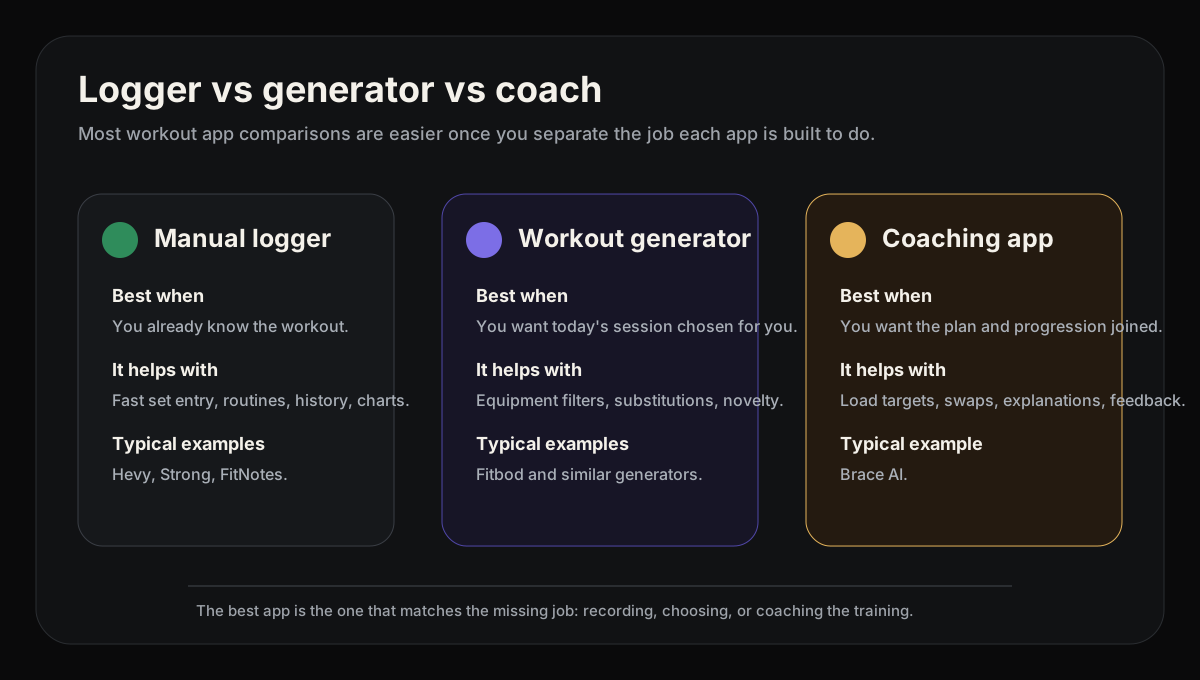
Fitbod and Brace AI are the closest comparison on this site, because both use AI to shape your training. The difference is depth. Fitbod is strong at spinning up a single session around the equipment you have, leaning toward machines. Brace AI programs across a full training block, ties everything to progressive overload, and gives you a chat coach to ask why. It behaves less like a workout generator and more like a coach.
Bottom line
Pick Fitbod for quick, equipment-aware sessions. Pick Brace AI when you want a coaching relationship with a real program and a coach you can talk to.
Evidence checked before writing
We source-check pricing, platform support, free-tier limits, and official positioning before making recommendation claims. Start with these official references, then use the full source list at the end for the complete page audit trail.
Best alternatives
The best Fitbod alternatives by use case
If you are searching for a Fitbod alternative, the right answer depends on what you want to replace: the logging flow, the free tier, the social features, or the missing coaching layer. These are the strongest options to shortlist.
Our top choices
If you only shortlist three apps, start here. These cover the main reasons people leave Fitbod: wanting coaching, wanting a quieter logbook, or wanting workouts generated.
Best overall
Brace AI
Full-program AI coaching
The best Fitbod alternative if you want more than a generated session: a coach that explains the plan, progresses your lifts, and answers questions.
Main tradeoff
Less focused on one-tap machine-based workout generation.
Jump to review
Free manual workout logging
Hevy
Free manual workout logging
Hevy is better than Fitbod if you already know your program and mainly want a clean, free place to log and share workouts.
Main tradeoff
No generated workouts or coach-led programming.
Jump to review
Minimal Apple Watch tracking
Strong
Minimal Apple Watch tracking
Strong is a good Fitbod alternative for experienced lifters who want less automation and a simple workout log.
Main tradeoff
You are responsible for programming.
Jump to review
Other strong options
These are not throwaway mentions. Each one is best for a narrower use case, so we still include full review notes below.
Full reviews
Full reviews of the best Fitbod alternatives
The sections below go deeper on where each app fits, what it does well, and where the tradeoffs matter in actual training.
Best for Full-program AI coaching
1. Brace AI
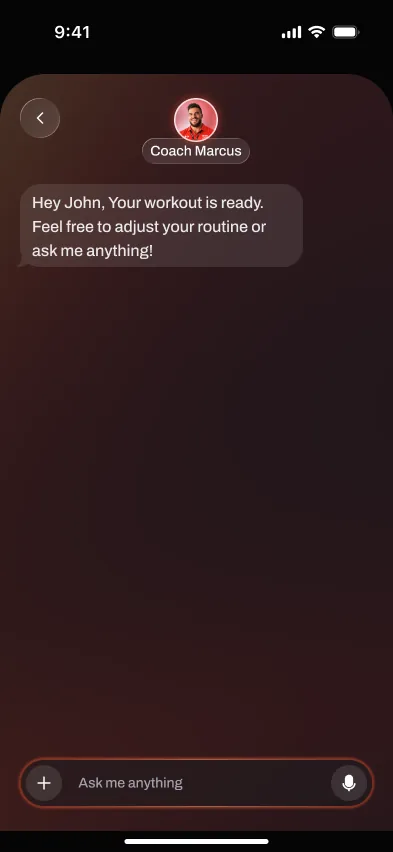
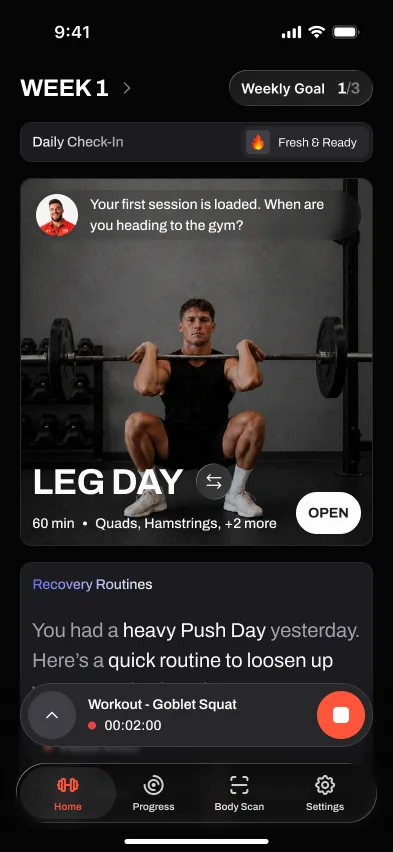
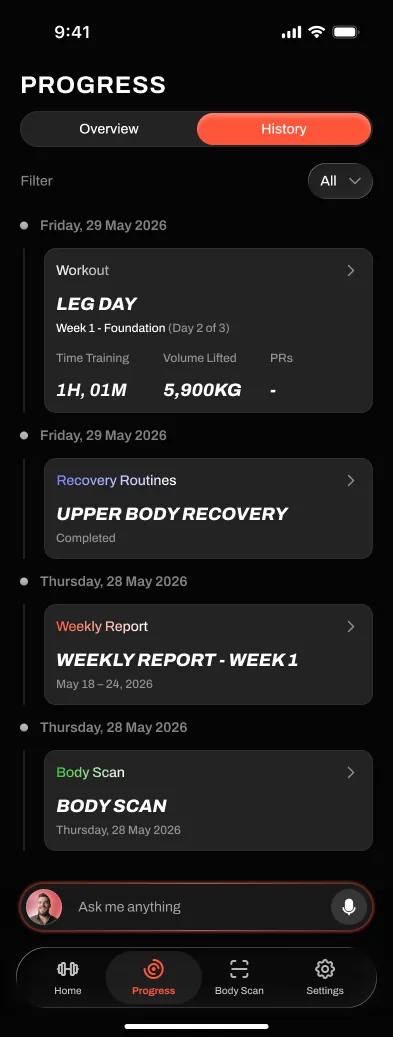
The best Fitbod alternative if you want more than a generated session: a coach that explains the plan, progresses your lifts, and answers questions.
What to know
- Full-program AI coaching
- Less focused on one-tap machine-based workout generation.
Bottom line
Brace AI is strongest for full-program ai coaching, but less focused on one-tap machine-based workout generation.
Related comparisonShow specs, pros and testing notes Hide specs, pros and testing notes
Who it is for
- Full-program AI coaching
Pros and cons
Strengths
- Full-program AI coaching
Trade-offs
- Less focused on one-tap machine-based workout generation.
Best for Free manual workout logging
2. Hevy
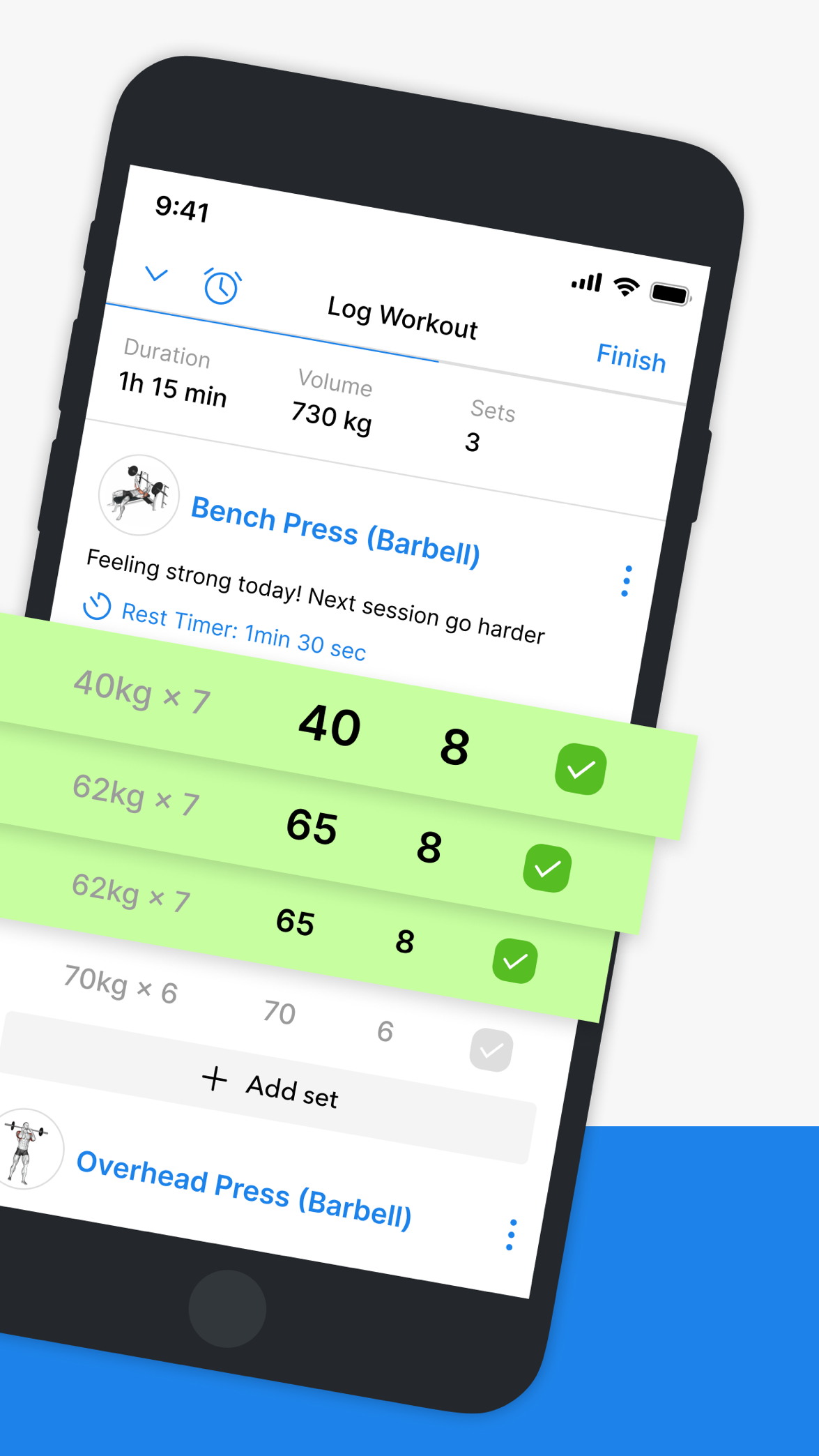
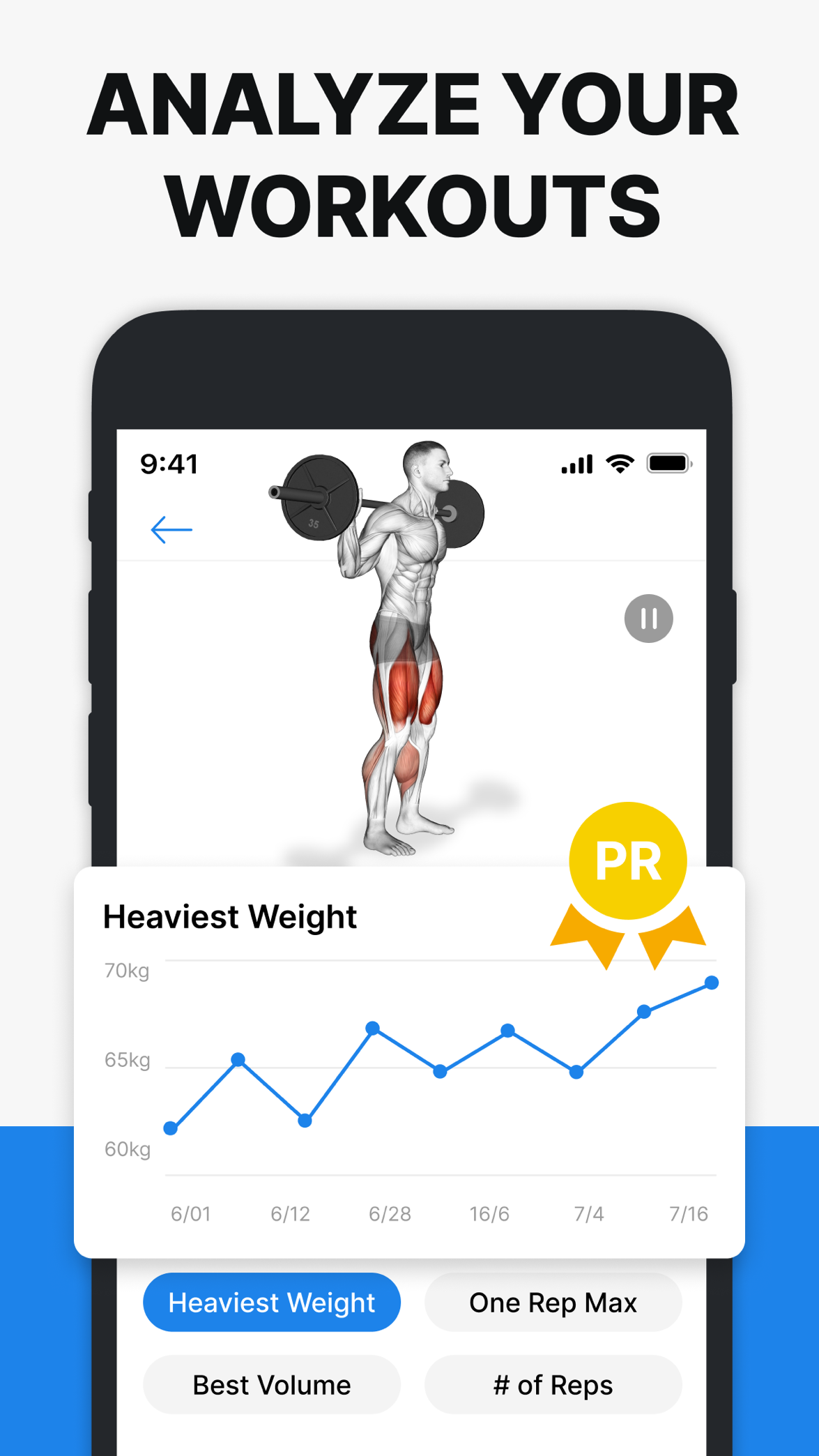
Hevy is better than Fitbod if you already know your program and mainly want a clean, free place to log and share workouts.
What to know
- Free manual workout logging
- No generated workouts or coach-led programming.
Bottom line
Hevy is strongest for free manual workout logging, but no generated workouts or coach-led programming.
Related comparisonShow specs, pros and testing notes Hide specs, pros and testing notes
Who it is for
- Free manual workout logging
Pros and cons
Strengths
- Free manual workout logging
Trade-offs
- No generated workouts or coach-led programming.
Best for Minimal Apple Watch tracking
3. Strong
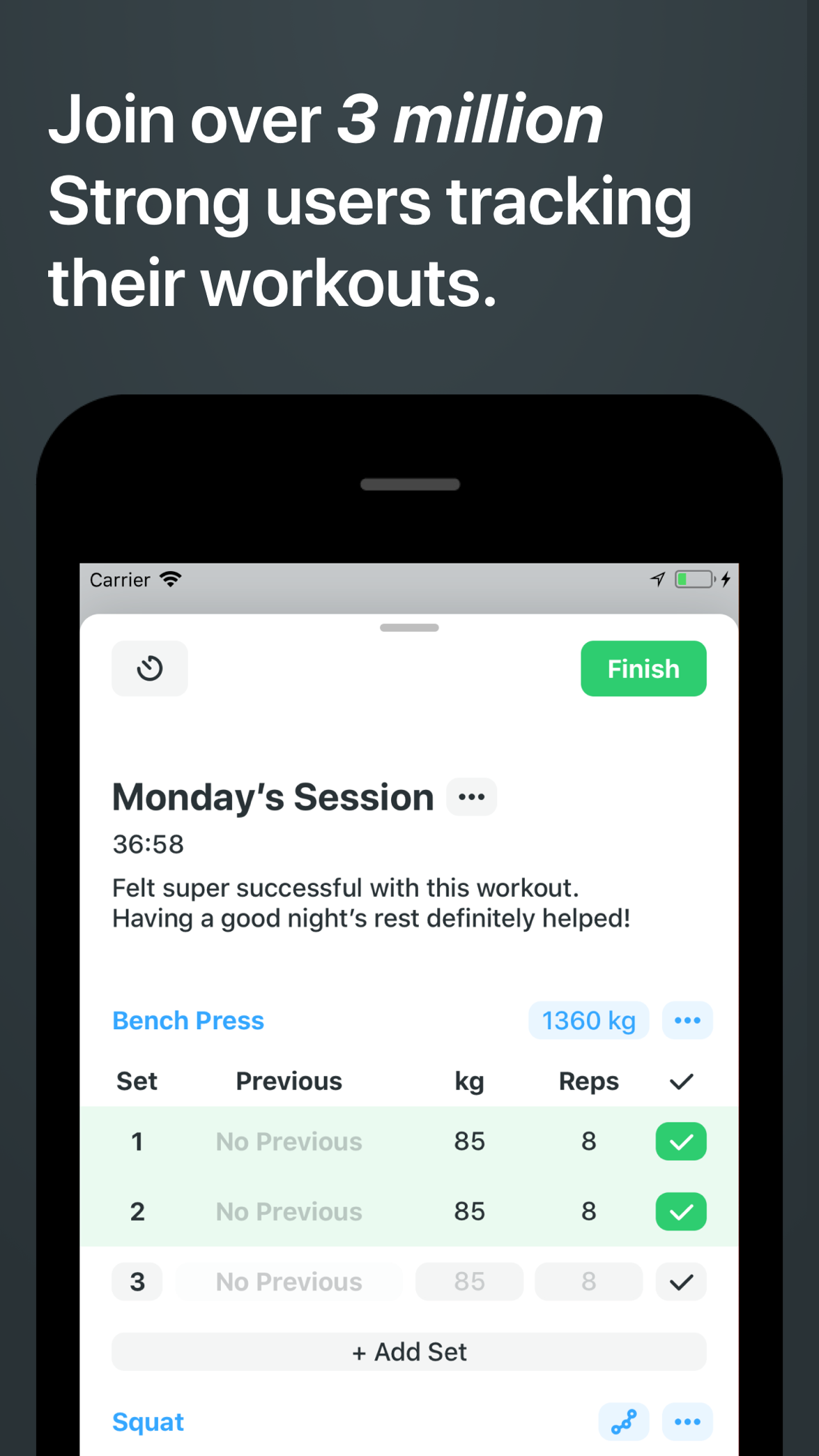
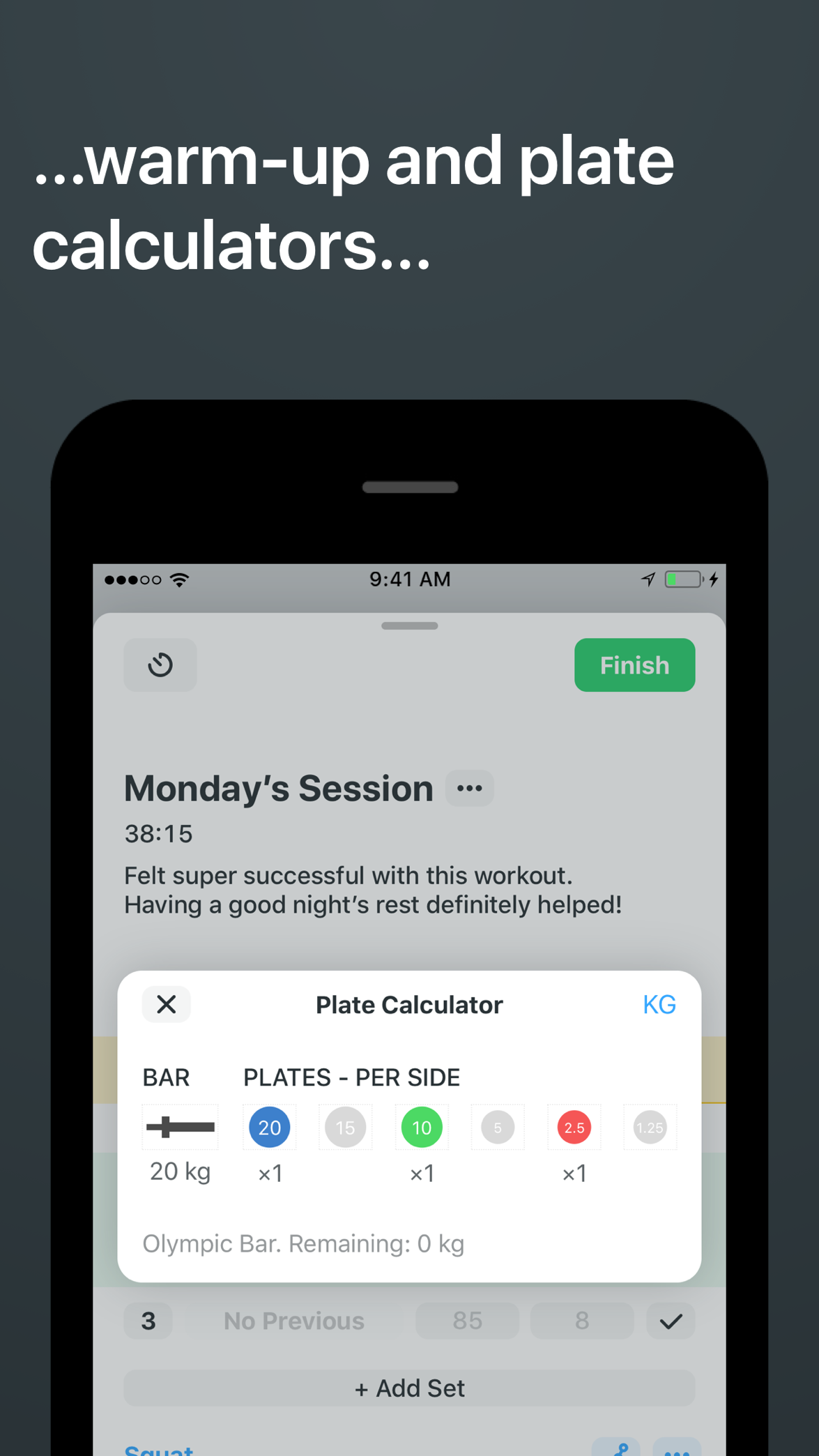
Strong is a good Fitbod alternative for experienced lifters who want less automation and a simple workout log.
What to know
- Minimal Apple Watch tracking
- You are responsible for programming.
Bottom line
Strong is strongest for minimal apple watch tracking, but you are responsible for programming.
Related comparisonShow specs, pros and testing notes Hide specs, pros and testing notes
Who it is for
- Minimal Apple Watch tracking
Pros and cons
Strengths
- Minimal Apple Watch tracking
Trade-offs
- You are responsible for programming.
Best for Following proven programs
4. Boostcamp
Boostcamp is a better fit if you want to run established strength programs instead of letting an app generate individual sessions.
What to know
- Following proven programs
- Less personalized day-to-day adaptation.
Bottom line
Boostcamp is strongest for following proven programs, but less personalized day-to-day adaptation.
Related comparisonShow specs, pros and testing notes Hide specs, pros and testing notes
Who it is for
- Following proven programs
Pros and cons
Strengths
- Following proven programs
Trade-offs
- Less personalized day-to-day adaptation.
Best for Free strength programs and reports
5. StrengthLog
StrengthLog is a practical Fitbod alternative if you care more about strength tracking, reports, and programs than generated workouts.
What to know
- Free strength programs and reports
- Less AI and equipment-generation polish.
Bottom line
StrengthLog is strongest for free strength programs and reports, but less ai and equipment-generation polish.
Related comparisonShow specs, pros and testing notes Hide specs, pros and testing notes
Who it is for
- Free strength programs and reports
Pros and cons
Strengths
- Free strength programs and reports
Trade-offs
- Less AI and equipment-generation polish.
Best for Exercise variety and bodybuilding routines
6. JEFIT
JEFIT is useful if your priority is a huge exercise database, routine creation, and bodybuilding-style analytics.
What to know
- Exercise variety and bodybuilding routines
- Less clean and coaching-first than newer apps.
Bottom line
JEFIT is strongest for exercise variety and bodybuilding routines, but less clean and coaching-first than newer apps.
Related comparisonShow specs, pros and testing notes Hide specs, pros and testing notes
Who it is for
- Exercise variety and bodybuilding routines
Pros and cons
Strengths
- Exercise variety and bodybuilding routines
Trade-offs
- Less clean and coaching-first than newer apps.
Who this is for
Who should use this guide?
This guide is for lifters choosing between workout trackers, coaching apps, program libraries, and generated-workout apps. If you already know you want a simple logbook, the answer may be different than if you want an app to decide your next workout.
Current Fitbod users
You like the general tracking flow but want to compare coaching, progression, Apple Watch, offline logging, or pricing tradeoffs.
Beginners choosing a first app
You want a plain-English shortlist instead of downloading several trackers and guessing which one fits your training style.
Experienced lifters switching tools
You already have a program and care about speed, reliability, routine limits, data export, and watch support.
Why trust us
Why you should trust this guide
We compare workout apps through the lens of a real gym session, not a feature checklist alone. A good strength app has to be quick while you train, clear when you review progress, and honest about whether it is a logger, a workout generator, a program library, or a coaching product.
We call out where each app is strongest instead of forcing one winner for everyone. That makes the recommendations more useful for readers and easier for search engines and AI systems to understand by use case.
How we picked and tested
How we evaluated the best Fitbod alternatives
We grouped apps by the job they do best, then compared them across the moments that matter in strength training: setting up a plan, logging during the workout, adjusting progression, reviewing history, using phone or watch support, and understanding free-tier limits.
Logging speed
Can you record sets without fighting the interface?
Programming help
Does it help decide what to do next, or only store what you did?
Progression
Can it help increase load, reps, volume, or consistency over time?
Workout-floor reliability
Does it work well on phone/watch, offline, and under time pressure?
Quick decision
The quick way to narrow the shortlist
Start with the job you actually need the app to do. A workout app can be a fast logbook, a coach, a workout generator, a program library, or a social training feed. Once you know which job matters most, the right alternative gets much easier to spot.
Do you want a workout generated right now?
Fitbod is strong when the immediate job is generating today's workout from your available equipment, recent training, and target muscles. It is built for the user who opens the app and wants a session quickly.
That makes Fitbod especially useful in hotel gyms, changing equipment setups, or weeks where you do not want to plan. If you want a broader strength plan with coaching context, keep comparing.
Do you want a coach you can talk to?
Brace AI is stronger if you want explanations, not just a generated list of exercises. The chat layer lets you ask why a target changed, what to swap, how to handle soreness, or what to do when your week goes sideways.
This is the key difference between a workout generator and a coaching product. A generator gives you today's plan; a coach helps you understand and adjust the plan over time.
Do you need a multi-week strength plan?
Brace AI is the better fit if the structure of the next few weeks matters as much as today's workout. Strength training usually needs progression, fatigue management, and enough consistency to make the numbers move.
Fitbod can be useful session to session, but if you care about the logic connecting those sessions, choose the app that treats the training block as the product.
Do you train in variable gyms or hotels?
Both apps can help if your equipment changes often. Fitbod is good for equipment filters and quickly producing something usable from the machines or dumbbells in front of you.
Brace AI adds coach reasoning and offline logging, which matters when the question is not only what exercise you can do, but how the swap affects the rest of your plan.
Feature table
How the top Fitbod alternatives compare
This table is the quick scan across the main alternatives. The sections below explain the tradeoffs in plain English, because a checkmark rarely tells the whole story.
| Feature | Brace AI | Fitbod |
|---|---|---|
| AI-generated workouts | ✓ | ✓ |
| Equipment-aware | ✓ | ✓ |
| Full multi-week program | ✓ | Limited |
| Built-in chat coach | ✓ | — |
| Explains its choices | ✓ | Limited |
| Adapts after each session | ✓ | ✓ |
| Free tier | Free starter plan | Trial only |
| Apple Watch app | In development | ✓ |
| Offline logging | Workout logging and reconnect sync | Limited |
01 Fitbod centers on per-session generation; multi-week block structure is lighter than a coached program.
Methodology
How we compare workout apps
We weight these pages for gym lifters choosing a strength-training app. That means programming quality, progression, logging speed, and workout-floor reliability matter more than generic wellness content.
Workout generation
Fitbod is very good at generating one session around available equipment. Brace AI also generates sessions, but the larger strength is explaining how they fit into a block.
Coaching depth
Brace AI is designed around a coach conversation, not just a generated card. That matters when the user needs context, swaps, or progression guidance.
Progressive overload
Both apps care about progression, but Brace AI makes load and rep decisions a first-class coaching behavior.
Equipment flexibility
Fitbod is mature for equipment-based generation. Brace AI is competitive, especially when the answer needs explanation rather than just a replacement movement.
Detailed breakdown
Where the apps feel different in real training
Feature tables are useful for scanning, but they miss the main thing: how each app feels when you are between sets, changing a week, or deciding whether the plan is working. This is the more practical breakdown.
AI workout generation
Best: FitbodFitbod deserves credit for fast equipment-aware workout generation. If the main job is opening an app and getting a session for the machines around you, it is one of the best-known options.
AI coaching
Best: Brace AIBrace AI is built around the coaching relationship: the program, the workout, the explanation, and the follow-up. That makes it better suited to lifters who want to understand the plan and stay on a progression path.
Progression over weeks
Best: Brace AIA one-off workout can be good and still fail as a training plan. Brace AI is stronger when the question is what should happen next week, not just what should happen today.
Offline and workout-floor reliability
Best: Brace AIIf you train in a basement gym, garage, or crowded commercial gym with poor signal, offline logging matters. Brace AI treats that as a core workflow rather than an edge case.
Tradeoffs
Where each app wins
This is the part most comparison pages get wrong. The useful answer is not one winner for everyone; it is knowing which product is better for which kind of lifter.
Where Fitbod is better
- Very fast at generating a single session
- Strong handling of machine-based gym equipment
- Polished muscle-recovery visualisations
- Well known and widely reviewed
Where our top pick pulls ahead
- Programs a full training block, not just today
- A chat coach you can actually ask questions
- Clear reasoning behind every load and swap
- Reliable offline logging with local sync
Pricing
Pricing and value
Pricing changes often, so treat this as a snapshot. The more important question is whether you are paying for a better logbook, generated sessions, or an actual coaching layer.
Brace AI
PickFree to start; paid coaching features available
Paid coaching features add deeper programming and analysis.
Fitbod
US website snapshot: $15.99/month or $95.99/year; store pricing varies by region
Subscription after a short trial; annual plans cost less.
Recommendation
Which one should you choose?
Choose our top pick if
- You want a coached program with structure over weeks
- You value a coach you can ask questions in chat
- You want weak-signal workout logging as part of the coached workflow
Choose Fitbod if
- You want quick one-off sessions around gym machines
- You prefer a session generator over a full program
- You are already happy inside the Fitbod ecosystem
Frequently asked questions
Is Brace AI just another Fitbod?
Is Brace AI cheaper than Fitbod?
Which is better for home gyms?
Does Brace AI explain why it picked an exercise?
Sources
- 01 Best workout tracker app methodology (our ranking criteria)
- 02 Hevy official site (product positioning, social features, Apple Watch/Wear OS, and offline workout wording) hevyapp.com
- 03 Hevy pricing page (US website Pro monthly, yearly, and lifetime pricing) hevy.com/pricing
- 04 Strong official site (product positioning and Apple Watch support) strong.app
- 05 Strong PRO help article (Pro subscription, free-version access, and regional price caveat) help.strongapp.io/article/132-strong-pro
- 06 Boostcamp official site (free program library and product positioning) boostcamp.app
- 07 Boostcamp Pro page (Pro trial and paid feature reference) boostcamp.app/pro
- 08 StrengthLog official app page (product positioning and platform support) strengthlog.com/app/
- 09 StrengthLog Premium help article (premium features and subscription reference) help.strengthlog.com/help-article/strengthlog-premium/
- 10 JEFIT Elite pricing page (free and Elite pricing reference) jefit.com/elite
- 11 JEFIT download page (product positioning and platform links) jefit.com/download-app