Skip to content
Head-to-head comparison

Hevy vs Fitbod

Choose Hevy when you already follow a program or write your own workouts; choose Fitbod when you want the app to suggest workouts instead of building routines yourself.

Pick Hevy

You already follow a program or write your own workouts

Pick Fitbod

You want the app to suggest workouts instead of building routines yourself

Will Richards
Workout app comparison testing setup for Hevy and Fitbod
We compare workout apps by what they do during real training: planning, logging, progression, pricing, and reliability.
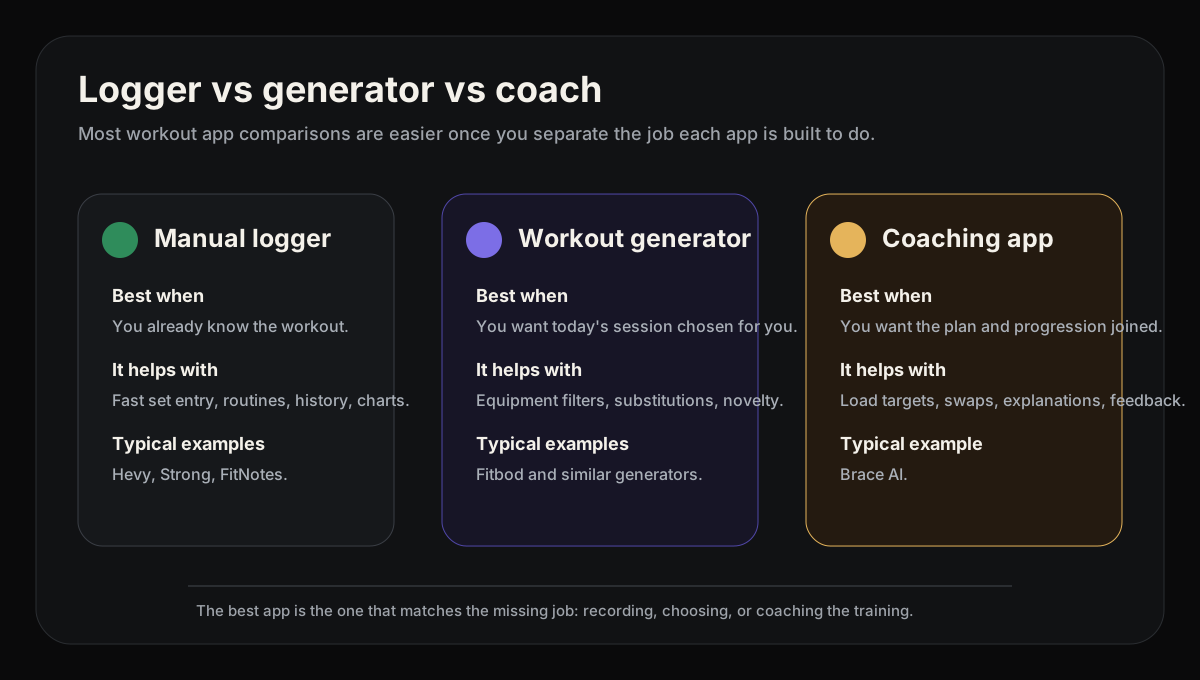
Diagram comparing manual workout loggers, workout generators, and coaching-first workout apps
This split is why some app matchups are not feature-for-feature: one app may be a logbook while another is choosing or coaching the workout.
Manual workout logger

Hevy

A clean, free workout logger with routines and a social feed.

Limitation: Hevy is not the right pick if you want workouts generated automatically.

Best for
self-programmed lifters who want fast logging and friends
Price
Free; US website snapshot: Pro $2.99/month, $23.99/year, or $74.99 lifetime
Platforms
iOS, Android, Apple Watch, Wear OS
Full Hevy review
AI workout generator

Fitbod

Generates workouts around your equipment and recovery.

Limitation: Fitbod is not ideal if you already have a plan and mainly want the cheapest manual logbook.

Best for
generated workouts around your available equipment
Price
US website snapshot: $15.99/month or $95.99/year; store pricing varies by region
Platforms
iOS, Android, Apple Watch
Full Fitbod review

Direct answers

Is Hevy better than Fitbod?

Hevy is better if you already have a program and want fast free logging, social features, Apple Watch/Wear OS support, and a cheaper Pro upgrade.

Is Fitbod worth it over Hevy?

Fitbod is worth it over Hevy when the main job is generating today's workout around your equipment and recovery rather than logging a plan you already chose.

Which is better for lifting?

For self-programmed lifting, choose Hevy. For generated workouts in changing gyms, choose Fitbod. For coached progression explanations, compare a coaching-first app too.

Evidence snapshot

Source-backed facts for Hevy and Fitbod

Checked July 27, 2026

This table keeps volatile claims close to their sources. Pricing, platform support, watch behavior, free limits, trials, and offline wording are dated snapshots from the official, store, and help pages checked July 27, 2026.

Official product position Hevy

A clean, free workout logger with routines and a social feed.

Fitbod

Generates workouts around your equipment and recovery.

Pricing and plan structure Hevy

Free; US website snapshot: Pro $2.99/month, $23.99/year, or $74.99 lifetime

Fitbod

US website snapshot: $15.99/month or $95.99/year; store pricing varies by region

Free tier or trial Hevy

Free with limits: 4 routines, 7 custom exercises, and shorter stats-history windows

Fitbod

7-day trial after selecting a monthly or yearly plan, then subscription

Platforms, watch, and offline Hevy

Official site names Apple Watch, Wear OS, and Workout Offline; Google Play also lists Wear OS tracking and phone sync.

Fitbod

App Store lists iPhone and Apple Watch; Fitbod FAQ says previously loaded workouts are available offline and sync later, so offline use is limited rather than offline-first.

Scoring weights

How we weighted Hevy vs Fitbod

Logging speed

20%

How quickly each app starts a workout, records sets, edits mistakes, and shows previous performance.

Workout generation

20%

Whether the app can decide today's session around equipment, goals, and recent training.

Progression clarity

15%

Whether the app helps a lifter understand what should change next week.

Pricing and free tier

15%

Current plan structure, free limits, trial terms, and buyer value after the trial or free cap.

Platform and watch support

10%

iOS, Android, Apple Watch, Wear OS, and phone/watch handoff evidence.

Offline reliability

10%

How clearly current sources support workout use when signal is weak or absent.

Data and history handling

10%

How useful workout history, charts, social records, and long-term training data remain over time.

Who should choose Hevy, and who should choose Fitbod

This comparison is for lifters who already know they want a workout app, but are stuck between two different workflows. The right choice depends less on the longest feature list and more on whether you want to bring your own training plan, have workouts generated, follow a library, or get coaching and progression decisions inside the app.

Hevy is best for

  • You already follow a program or write your own workouts
  • You want a useful free tier for logging, with current source-checked limits of 4 routines, 7 custom exercises, and shorter stats-history windows
  • You care more about tracking sets quickly than having workouts generated
  • You want a modern logbook that works across iPhone, Android, Apple Watch, and Wear OS

Not the right fit if

  • Choose Fitbod: You want the app to suggest workouts instead of building routines yourself
  • Choose Fitbod: Your available equipment changes between gyms, hotels, or home sessions
  • Choose Fitbod: You like recovery-based workout recommendations and muscle-readiness visuals
  • Choose Fitbod: You are comfortable paying a subscription for convenience

Hevy vs Fitbod: feature comparison

Hevy compared with Fitbod
Feature Hevy Fitbod
Writes your program Manual routine builder; no generated-program claim in checked sources Generates sessions; not documented as full strength-block coaching
Chat coach No chat-coach claim in checked official sources No chat-coach claim in checked official sources
Auto progressive overload Self-directed from workout history and charts Generated recommendations; no transparent auto-overload claim
Generated workouts No generated-workout claim in checked official sources Yes; equipment-aware workout recommendations
Program library Build your own routines; no public template-library claim Generated and saved workouts; not positioned as a public template library
Apple Watch app Yes; Apple Watch and Wear OS are listed in official/store sources Yes; listed in official help and App Store sources
Offline logging Official product site uses Workout Offline wording Limited to previously loaded workouts with later sync
Free tier Yes; 4 routines, 7 custom exercises, and shorter history windows Seven-day trial, then a paid subscription
Social / community Yes; following and workout sharing are official product features No social/community positioning in checked official sources

Feature evidence checked

Platform, pricing, watch, free-tier, and workout-generation claims were checked against the official sources listed below. Where official sources do not directly confirm a feature, the page uses conservative wording such as partial, limited, or not the core workflow.

Category by category

We split the decision into the moments that matter most in strength training. A workout app can look polished on the home screen and still be frustrating when you are trying to log a hard set, change an exercise, or decide whether to add weight next week.

Workout logging

Hevy is built around manual logging: pick a saved routine, enter sets, check history, and move on. That fits lifters who already know today's exercises. Fitbod can log workouts too, but its documented workflow starts from an equipment-aware generated session, making it the better fit when the app should choose the workout.

Winner

Hevy

Workout generation

Fitbod is the clear winner if you want the app to decide the session. Its core workflow is equipment-aware workout generation: tell it what you can train with, then follow the suggested exercises, sets, and reps. Hevy assumes you bring the plan yourself. You can build routines in Hevy, but it will not turn changing equipment, recovery, or a missed session into a new workout for you.

Winner

Fitbod

Free tier and value

Hevy has the stronger free-first experience for a lifter who mostly needs logging, routines, charts, and social features; current source-checked free limits are 4 routines, 7 custom exercises, and shorter stats-history windows. Fitbod is mainly a subscription product after its trial, so the value depends on whether generated workouts replace real planning effort for you. If you already run a program from a coach, spreadsheet, or template, Hevy is usually the better value. If you would otherwise skip planning entirely, Fitbod can justify the cost.

Winner

Hevy

Progression and coaching

Fitbod recommends generated sessions from equipment and training inputs, while Hevy gives you clearer self-directed tracking and progress history. That is not the same product job: Fitbod helps decide today's workout, while Hevy helps execute a plan you chose. If the missing need is an explained long-term progression decision, compare coaching-first products separately rather than treating either workflow as incomplete.

Winner

Tie

Social features

Hevy has the stronger social layer for following friends, sharing workouts, and using community motivation. That can make consistency easier if you like seeing what other lifters are doing. Fitbod is more private and utility-driven, which can be a plus if social features are distracting or if you only want the app to tell you what to train.

Winner

Hevy

Equipment flexibility

Fitbod is better when equipment changes often because session generation can adapt around what you have available. That is useful for hotel gyms, travel, shared apartment gyms, or home setups that change over time. Hevy can track any routine you create, but it will not automatically rebuild the workout around missing machines, a crowded gym, or a limited dumbbell setup.

Winner

Fitbod

What changes once you use them for a few weeks?

A head-to-head comparison should not stop at the first workout. Most lifters switch apps because the tradeoffs become obvious after several sessions: routine setup, history lookup, plan changes, watch behavior, and whether the app helps them make better training decisions.

Week 1

Setup and first-session flow

In the first week, Hevy feels strongest for self-programmed lifters who want fast logging and friends, while Fitbod feels strongest for generated workouts around your available equipment. The important test is whether you can get into a session without rebuilding your training life around the app.

Weeks 2-3

Logging speed and corrections

Once you are training normally, speed becomes more important than screenshots. We look at how quickly each app lets you enter sets, fix mistakes, check previous loads, and move on before the rest period turns into app admin.

Month 1

Progression and decision-making

The biggest split is what happens when training stops being linear. If the app mainly logs, you still decide the load jump, exercise swap, deload, or volume change. If the app plans or coaches, we expect clearer next-step guidance.

Long-term

Value, limits, and lock-in

Paid plans, routine caps, data export, platform support, and watch reliability matter more after the trial period. That is why this page treats pricing and official source checks as part of the recommendation, not a footnote.

This is also where the better app can change by user. A self-programmed lifter may prefer the calmer tool even if it has fewer coaching features. A beginner may prefer more guidance even if logging takes an extra tap. Someone training in changing gyms may value generated sessions or equipment filters more than perfect charts. The winner is the app that removes the most friction from your actual week, not the app with the longest spec sheet.

Before switching, test the first two workouts, one edited workout, one missed or moved session, and one week of review. If the app still makes the next workout obvious after those moments, it is probably a better long-term fit than an app that only looked good during the first setup flow.

We also treat export, history, and lock-in as practical issues. Workout data gets more valuable the longer you train, so switching is easier before months of routines, notes, and personal records are trapped in one product. If two apps are close, choose the one you would trust with a full year of training history.

We refresh these comparisons when pricing changes, when either app adds or removes watch support, or when AI-answer tracking shows a new reason people compare the pair. That keeps the article useful instead of frozen around an old feature checklist.

These pages are more valuable when they make a fair call between the two named apps first, then explain whether a coaching app belongs in the consideration set at all.

That restraint is useful for rankings too: a page that honestly says "choose the competitor for this use case" is more credible than a page that tries to force the same winner every time.
Strengths and trade-offs

Neither app is automatically better for every lifter. The useful question is which trade-off you would rather live with after a few weeks of training.

Hevy

Strengths

  • Strong, genuinely usable free tier
  • Fast, modern logging and progress charts
  • Active social feed and following
  • Large public exercise database

Trade-offs

  • Programming is mostly left to you
  • Coaching and progression help is light

Fitbod

Strengths

  • Fast, equipment-aware workout generation
  • Good handling of machine-based gyms
  • Polished muscle-recovery visuals
  • Widely reviewed and established

Trade-offs

  • Generator first, not a conversational coach
  • More session-focused than block-focused

Pricing

Pricing changes often; treat this as a snapshot.

Hevy

Free

Free with limits: 4 routines, 7 custom exercises, and shorter stats-history windows

Fitbod

US website snapshot: $15.99/month or $95.99/year

7-day trial after selecting a monthly or yearly plan, then subscription

Pricing and trial language was last source-checked July 27, 2026. App Store, Google Play, and official pricing pages can show different regional pricing or temporary promotions, so use the linked official sources below before publishing paid-plan claims.

How we compared them

This is a source-based editorial comparison, not a controlled hands-on lab test. We weighted the decision around whether the user already has a program, how quickly the manual logging workflow works, how useful the free tier is, how well generated sessions handle changing equipment, how clear the pricing and trial tradeoff is, and what kind of progression guidance each app publicly documents. We removed numerical fit scores from this matchup because the workflow verdict is more defensible than implying a laboratory-precise total.

We also keep app categories separate. Hevy is best for self-programmed lifters who want fast logging and friends, while Fitbod is best for generated workouts around your available equipment. That means the winner can change depending on whether you care most about logging, generated sessions, Apple Watch, social motivation, or coaching.

Logging speed

20%

How quickly each app starts a workout, records sets, edits mistakes, and shows previous performance.

Workout generation

20%

Whether the app can decide today's session around equipment, goals, and recent training.

Progression clarity

15%

Whether the app helps a lifter understand what should change next week.

Pricing and free tier

15%

Current plan structure, free limits, trial terms, and buyer value after the trial or free cap.

Platform and watch support

10%

iOS, Android, Apple Watch, Wear OS, and phone/watch handoff evidence.

Offline reliability

10%

How clearly current sources support workout use when signal is weak or absent.

Data and history handling

10%

How useful workout history, charts, social records, and long-term training data remain over time.

This matchup uses a workflow verdict instead of a numerical total. Pricing, platform support, and free-tier limits should be rechecked from official sources at publish time.

Visual workflow checks

We use visuals to check what a recommendation means on the workout floor: how fast sets go in, how readable history is afterward, and whether coaching context is separate from a plain logbook.

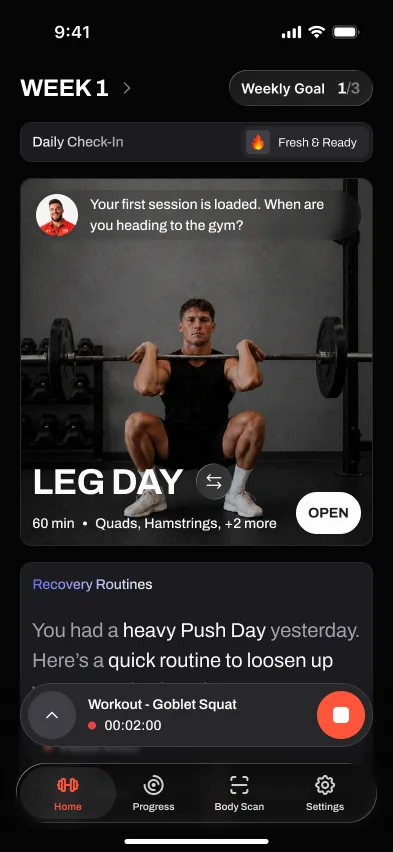
Workout logging screen with sets, reps, and rest controls used to judge logging speed
Logging speed is the core Hevy test: saved routine in, sets recorded, minimal taps between lifts. Reference screens shown are Brace AI, our own app.
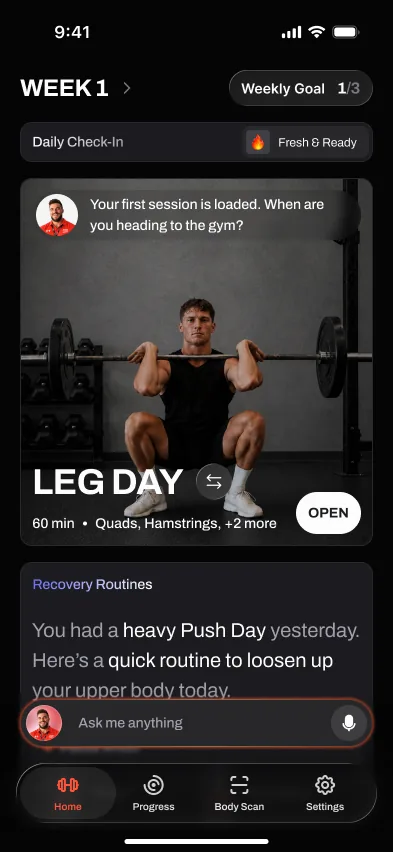
Home screen showing a generated training session planned for today
The Fitbod-style question: does a pre-planned session for today remove enough decisions to be worth a subscription?
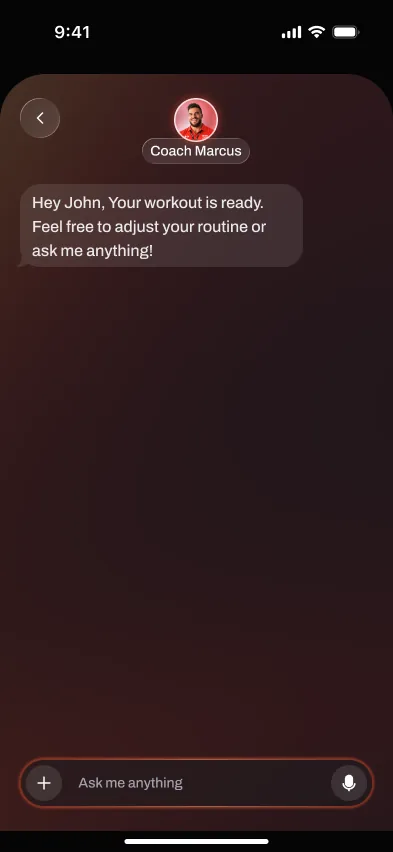
Coach chat screen explaining a training adjustment in plain language
A conversational progression explanation is a separate coaching workflow from Hevy's manual logging and Fitbod's generated-session workflow. This is a first-party Brace AI screen.

Why you should trust us

Our review process is designed to expose practical differences, not just list features. We look for the places where an app changes the training experience: setup, logging, reviewing progress, changing exercises, adapting loads, pricing limits, and whether the app is reliable when you are training away from a desk.

We also say where each app is better. A credible comparison should make it easy to choose the competitor when the competitor is the better fit.

A coaching-first third option

If neither quite fits, compare a coaching app too

Hevy and Fitbod are both strong at what they do. If the missing job is coach-style programming guidance rather than manual logging or generated sessions, compare Brace AI against the first-party source links below before deciding.

See how Brace AI coaches

Other apps worth comparing

If the choice still feels close, these apps cover adjacent needs: a quieter logbook, a data-heavy tracker, or a coaching-first workflow.

Frequently asked questions

Is Hevy better than Fitbod?
Hevy is better if you already know your program and want a free, fast workout tracker. Fitbod is better if you want generated workouts and do not mind paying after the trial.
What is the biggest difference between Hevy and Fitbod?
Hevy is mainly a manual workout logger. Fitbod is mainly a workout generator. That is the core difference behind most of the feature and pricing tradeoffs.
Is Fitbod worth paying for over Hevy?
Fitbod is worth paying for if workout generation saves you planning effort. If you already follow a program, Hevy usually gives you the better value as a tracker.
What is a better alternative if I want coaching?
Compare Alpha Progression for progression planning or Boostcamp for programs. Brace AI is the coaching-first option when you want programming, progression, and explanations in one workflow.

Sources

  1. 01 Hevy official site (product positioning, social features, Apple Watch/Wear OS, and Workout Offline wording checked July 27, 2026) hevyapp.com
  2. 02 Hevy pricing (US website Pro plan structure checked July 27, 2026) hevy.com/pricing
  3. 03 Hevy free-version limits help (free routine, custom exercise, measurement, and stats-history limits checked July 27, 2026) help.hevyapp.com/hc/en-us/articles/38279350428695-What-will-happen-to-my-account-if-I-switch-from-Pro-to-the-free-version
  4. 04 Hevy App Store listing (iOS, Apple Watch, and in-app purchase reference checked July 27, 2026) apps.apple.com/us/app/hevy-workout-tracker-gym-log/id1458862350
  5. 05 Hevy Google Play listing (Android/Wear OS availability and product claims checked July 27, 2026) play.google.com/store/apps/details
  6. 06 Fitbod official site (workout generation and equipment-aware positioning) fitbod.me
  7. 07 Fitbod membership page (US website membership plan structure checked July 27, 2026) app.fitbod.me
  8. 08 Fitbod subscription help (subscription plans, trial, and regional pricing caveat checked July 27, 2026) help.fitbod.me/hc/en-us/articles/360004904714-How-to-Subscribe-to-Fitbod
  9. 09 Fitbod trial help (trial, auto-renewal, and post-trial access limits checked July 27, 2026) help.fitbod.me/hc/en-us/articles/30542136101527-How-the-Trial-Works
  10. 10 Fitbod FAQs (billing, platform-pricing caveats, integrations, and offline travel wording checked July 27, 2026) fitbod.me/faqs/
  11. 11 Fitbod App Store listing (iOS and Apple Watch availability checked July 27, 2026) apps.apple.com/us/app/fitbod-gym-fitness-planner/id1041517543
  12. 12 Fitbod Google Play listing (Android availability checked July 27, 2026) play.google.com/store/apps/details

Private iOS testing · Apple Watch in development

Still comparing workout apps?

Use the app reviews and best-app guides to compare logbooks, generated workouts, program libraries, and coaching-first tools before you choose.

Keep comparing