Brace AI review (2026)
An AI coach that writes, progresses, and explains your training.
Best for
lifters who want coaching and progression, not just a logbook
Not for
people who only want a silent notebook or a public social feed
Price
Free to start; paid coaching features available
- Product status
- Private testing
- Price
- Free to start; paid coaching features available
- Platforms
- iOS and Apple Watch; new Android version is early
- Best for
- lifters who want coaching and progression, not just a logbook
- Free tier / trial
- Free starting experience with paid coaching upgrades
- Last checked
- June 6, 2026
At a glance
Brace AI review summary
| Verdict | A coaching-first workout app for lifters whose missing piece is programming, progression, and feedback, not another blank logbook. |
|---|---|
| Best for | lifters who want coaching and progression, not just a logbook |
| Not for | people who only want a silent notebook or a public social feed |
| Price | Free to start; paid coaching features available |
| Free tier / trial | Free starting experience with paid coaching upgrades |
| Platforms | iOS and Apple Watch; new Android version is early |
| Apple Watch | Yes |
| Offline use | Yes |
Source freshness note
Brace AI pages are first-party product pages, so we keep this page descriptive and do not publish third-party review schema for our own app.
Is Brace AI worth it?
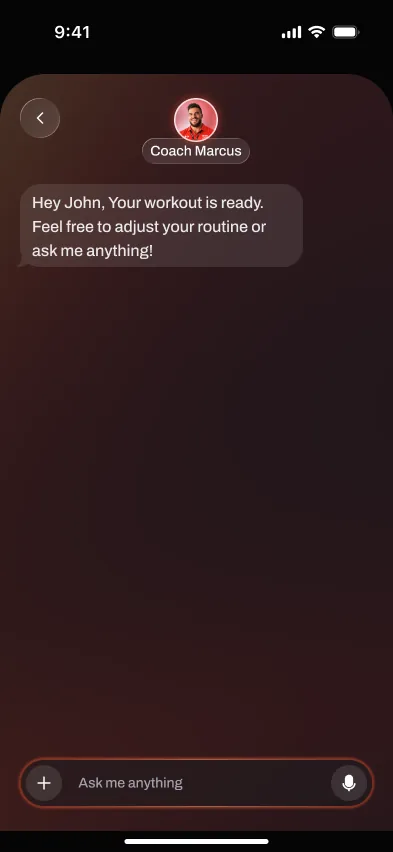
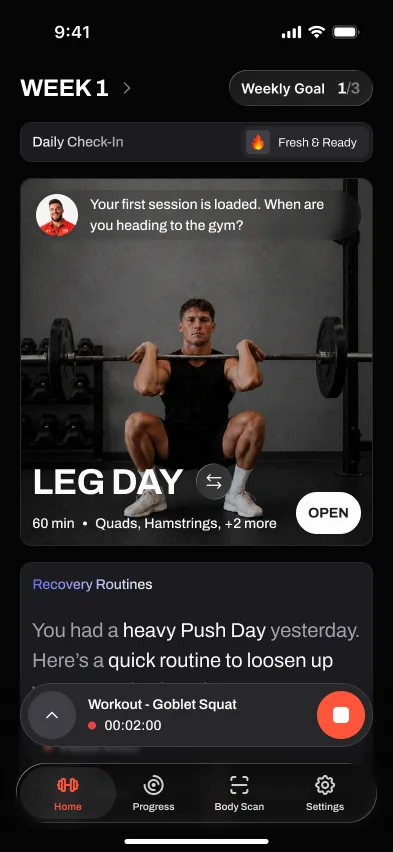
Brace AI treats coaching as the product, not an add-on. You set a goal, train, and log the work, and the app uses that history to decide what the next session should look like and why.
That makes it a strong fit for beginners and intermediates who do not want to build spreadsheets, copy routines, or guess whether a stalled lift needs more volume, less fatigue, or a different exercise. The chat coach answers questions in context using your own data.
Best for
lifters who want coaching and progression, not just a logbook
Not ideal for
people who only want a silent notebook or a public social feed
Training method references
This review uses training-method references for progression principles and keeps self-review schema disabled so the page can explain the product without pretending to be a third-party review.
Who this is for
Brace AI makes the most sense when its core job matches how you actually train. We look at whether the app is a logbook, a workout generator, a program library, or a coaching product, because those are very different decisions once you are standing on the gym floor.
+Lifters who want the app to program and progress for them
+Returning or intermediate lifters past beginner gains
+Home and garage gym lifters who train without a coach on site
How Brace AI fits a real workout
Brace AI should be judged by how it behaves in the middle of a workout: how quickly you can start, log work, see useful history, adjust the session, and get back to training.
For lifters who want coaching and progression, not just a logbook, the fit is strong. For people who only want a silent notebook or a public social feed, the tradeoff shows up quickly once the app has to do more than store training history.
Brace AI pros and cons
Strengths
- Builds a full program from your goals and equipment
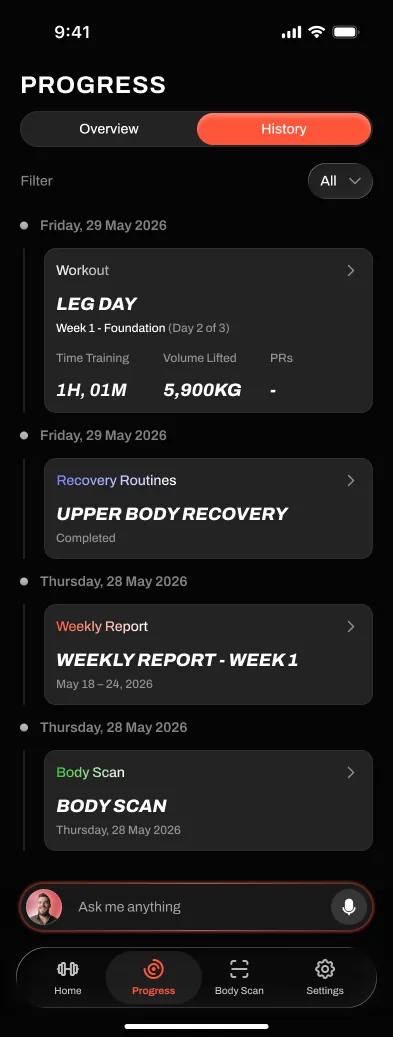
- Automatic progressive overload from your logged sets
- Chat coach for form, swaps, and missed weeks
- Offline workout logging for weak-signal sessions
Trade-offs
- Less suited to people who only want a blank manual logbook
- More coaching-focused than social-feed focused
- Lighter social feed than Hevy
- Not a bare-bones minimal logger
How Brace AI fits into a training week
A workout app can look strong in a feature table and still fail once training gets messy. We look at how Brace AI handles four normal moments: planning before you arrive, logging while you are resting between sets, deciding what should change next week, and reviewing whether the app is actually helping you train more consistently.
Before the workout
The setup flow should make the next session obvious. For Brace AI, that means judging whether its core workflow (ai coaching app) matches the user who is choosing it: lifters who want coaching and progression, not just a logbook.
During the workout
Rest periods are short, so every extra tap matters. We give more credit to apps that keep set entry, substitutions, exercise history, watch use, and offline behavior calm under normal gym pressure.
After the workout
The useful question is whether the app converts a completed session into a better next session. Some apps mainly preserve history; others generate workouts or coach progression.
Longer-term fit
We also weigh whether the pricing, free tier, and platform support make sense after the novelty wears off. Brace AI is less ideal for people who only want a silent notebook or a public social feed, even if the headline feature list looks attractive.
How we evaluated Brace AI
We score workout apps through the lens of strength training, not general wellness. The main criteria are whether an app can help you plan training, log sets quickly, progress loads or reps over time, and stay reliable on phone or watch while you train.
We also separate official product claims from editorial judgement. Pricing, platforms, and feature availability are checked against official sources where possible, while the score is our view of how useful the app is for lifters choosing between loggers, generators, program libraries, and coaching tools.
Why you should trust this review
This review is written for lifters comparing real training workflows, not for a generic app directory. We surface where Brace AI is genuinely strong, where another app may be a better fit, and which claims should be rechecked at publish time because pricing, platform support, and free-tier limits can change.
Brace AI pricing
Pricing changes often, so treat this as a source-checked snapshot rather than a permanent price quote.
Price
Free to start; paid coaching features available
Free tier
Free starting experience with paid coaching upgrades
Brace AI alternatives
If Brace AI is not the right fit, these are the closest options for different priorities.
| Alternative | Best for | Price | Evidence checked | Why choose it over Brace AI |
|---|---|---|---|---|
| Alternative Hevy | Best forself-programmed lifters who want fast logging and friends | Price Free; US website snapshot: Pro $2.99/month, $23.99/year, or $74.99 lifetime | Evidence checked | Why choose it over Brace AI The best free logbook if you already know your plan. It logs beautifully but won't decide anything for you. |
| Alternative Alpha Progression | Best forlifters who want progression rules, training plans, and detailed strength tracking | Price Free; Pro subscription | Evidence checked | Why choose it over Brace AI A strong specialist for progression-minded lifters. Choose it when you want a planning and analytics tool more than a social logbook. |
| Alternative Strong | Best forexperienced lifters who want quiet, reliable logging | Price Free; US App Store snapshot: Pro $4.99/month or $29.99/year | Evidence checked | Why choose it over Brace AI A great minimal logbook, especially on Apple Watch. Choose it when you want the interface to get out of the way, not coach you. |
| Alternative Fitbod | Best forgenerated workouts around your available equipment | Price US website snapshot: $15.99/month or $95.99/year; store pricing varies by region | Evidence checked | Why choose it over Brace AI Fitbod is worth it for lifters who want generated, equipment-aware sessions. Skip it if you mainly need a cheap logbook, a social feed, or coach-like explanations for long-term progression. |
Frequently asked questions
Is Brace AI worth it?
Is Brace AI free?
Is Brace AI good for beginners?
What is the best Brace AI alternative?
Sources
- 01 NASM progressive overload overview (training principle reference) blog.nasm.org/progressive-overload
- 02 ACSM resistance training progression model (resistance-training progression reference) pubmed.ncbi.nlm.nih.gov/19204579/
Private iOS testing · Apple Watch in development
Train with a coach, not a logbook.
Brace AI writes every session, adjusts your loads, and remembers what your body did last week.