Fitbod review (2026)
Generates workouts around your equipment and recovery.
Best for
generated workouts around your available equipment
Not for
conversational coaching, social accountability, or a full strength block
Price
US website snapshot: $15.99/month or $95.99/year; store pricing varies by region
- Editorial score
- 4.1 / 5
- Price
- US website snapshot: $15.99/month or $95.99/year; store pricing varies by region
- Platforms
- iOS, Android, Apple Watch
- Best for
- generated workouts around your available equipment
- Free tier / trial
- 7-day trial after selecting a monthly or yearly plan, then subscription
- Last checked
- July 27, 2026
At a glance
Fitbod review summary
| Verdict | Fitbod is worth it for lifters who want generated, equipment-aware sessions. Skip it if you mainly need a cheap logbook, a social feed, or coach-like explanations for long-term progression. |
|---|---|
| Best for | generated workouts around your available equipment |
| Not for | conversational coaching, social accountability, or a full strength block |
| Price | US website snapshot: $15.99/month or $95.99/year; store pricing varies by region |
| Free tier / trial | 7-day trial after selecting a monthly or yearly plan, then subscription |
| Platforms | iOS, Android, Apple Watch |
| Apple Watch | Yes |
| Offline use | Limited; previously loaded workouts can work offline and sync later |
Source freshness note
Official sources are used for pricing, platform, free-tier, and feature claims. Editorial and community sources are supporting context only. Store prices, trials, and regional availability can change, so check the linked source before buying.
In this 2026 review we refreshed Fitbod's US website price snapshot, 7-day trial language, App Store/Google Play platform evidence, and Apple Watch/offline caveats. Last source check: July 27, 2026.
Offline detail: Fitbod's current FAQ says previously loaded workouts are available offline and sync when the connection returns. This review still labels offline use as limited because fresh recommendations, account actions, store checkout, and cloud-dependent sync behavior should be checked before relying on Fitbod as an offline-first logbook.
Is Fitbod worth it?
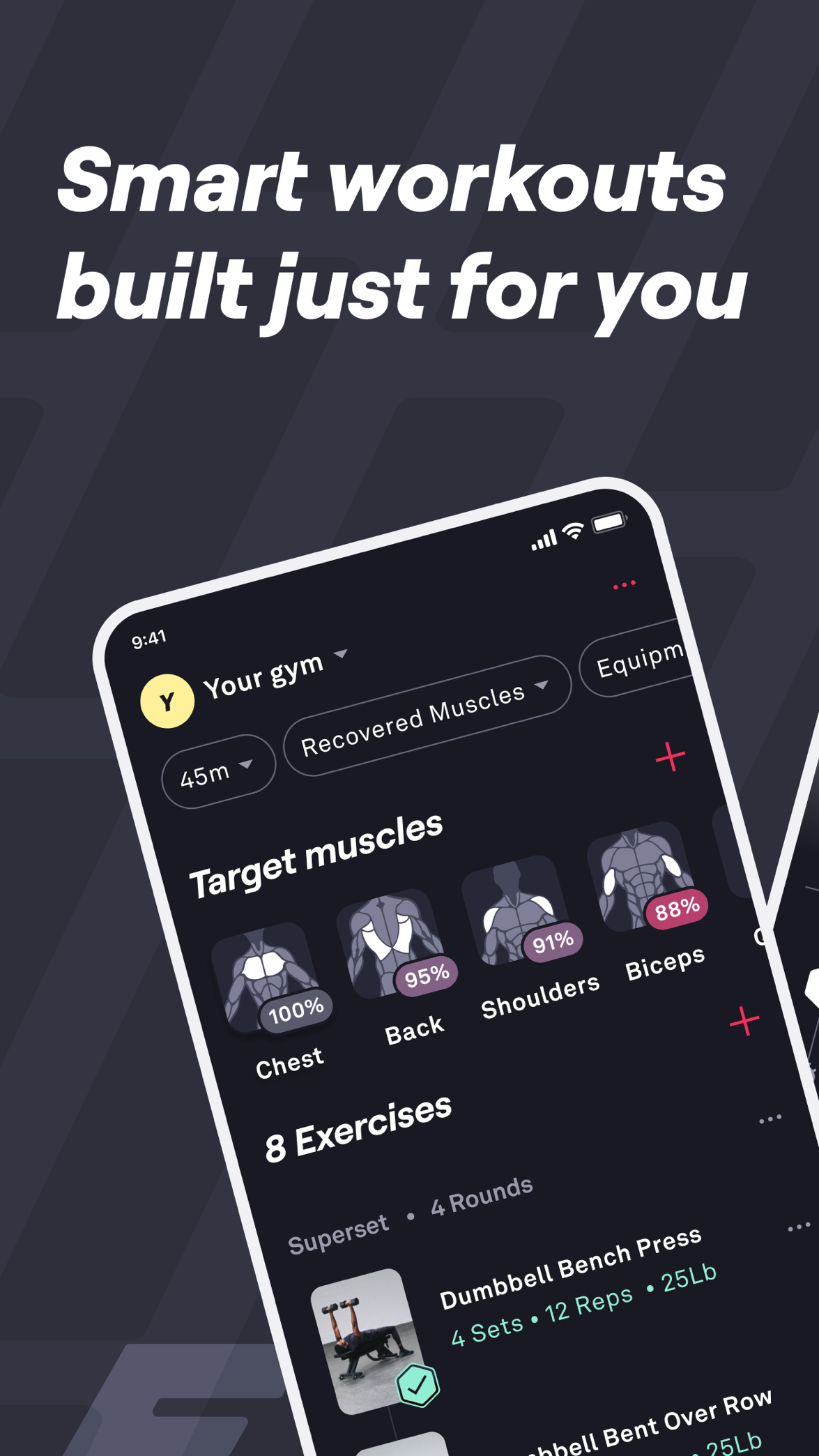
Open Fitbod in a gym you've never trained in and it earns its keep immediately: tell it what equipment is actually free and it builds today's session around it, factoring in what you've trained recently and which muscles it thinks are still recovering. That's the workflow we found ourselves reaching for on hotel-gym trips and at a new gym with an unfamiliar machine lineup — no routine-building, just open the app and go.
What it won't do is talk. There's no chat to ask why a lift stalled or what a training block is building toward — Fitbod hands you a session, not a conversation about your training. It suggests exercises, sets, and reps well, but reasoning through your own history in plain language isn't the product.
If convenience beats control, Fitbod is worth the subscription after the 7-day trial. If you already have a program you trust, a manual tracker like Hevy or Strong is cheaper and better suited. And if what you actually want is the reasoning behind the session, not just the session, that's the piece we built Brace AI to provide.
Best for
generated workouts around your available equipment
Not ideal for
conversational coaching, social accountability, or a full strength block
Choose Fitbod for
Generated workouts built around today's available equipment, recovery context, and recent training history.
Choose Hevy or Strong for
A cheaper manual logbook when you already know the program and mainly need fast set entry.
Choose coaching for
Multi-week block decisions, stalled-lift explanations, and progression logic that needs more than generated sessions.
Official evidence checked
Pricing, platform, and feature claims are checked against official product sources and app-store listings where available.
Who this is for
Fitbod makes the most sense when its core job matches how you actually train. We look at whether the app is a logbook, a workout generator, a program library, or a coaching product, because those are very different decisions once you are standing on the gym floor.
+People who want sessions generated, not planned
+Lifters in gyms with variable machine equipment
+Anyone who hates building their own routines
How Fitbod fits a real workout
What we verified for this refresh
The June 2026 refresh rechecked Fitbod's public website checkout, subscription help, trial help, FAQ, App Store listing, and Google Play listing. Workflow judgments below are based on those public product surfaces: generated-session setup, equipment selection, replacement flow, Apple Watch availability, and offline caveats. We do not treat this refresh as a fresh paid-account no-signal test; device-specific checkout screens and offline sync behavior should still be verified on the reader's own account before purchase or travel.
Fitbod should be judged by how it behaves in the middle of a workout: how quickly you can start, log work, see useful history, adjust the session, and get back to training.
For generated workouts around your available equipment, the fit is strong. For conversational coaching, social accountability, or a full strength block, the tradeoff shows up quickly once the app has to do more than store training history.
Fitbod pros and cons
Strengths
- Fast, equipment-aware workout generation
- Good handling of machine-based gyms
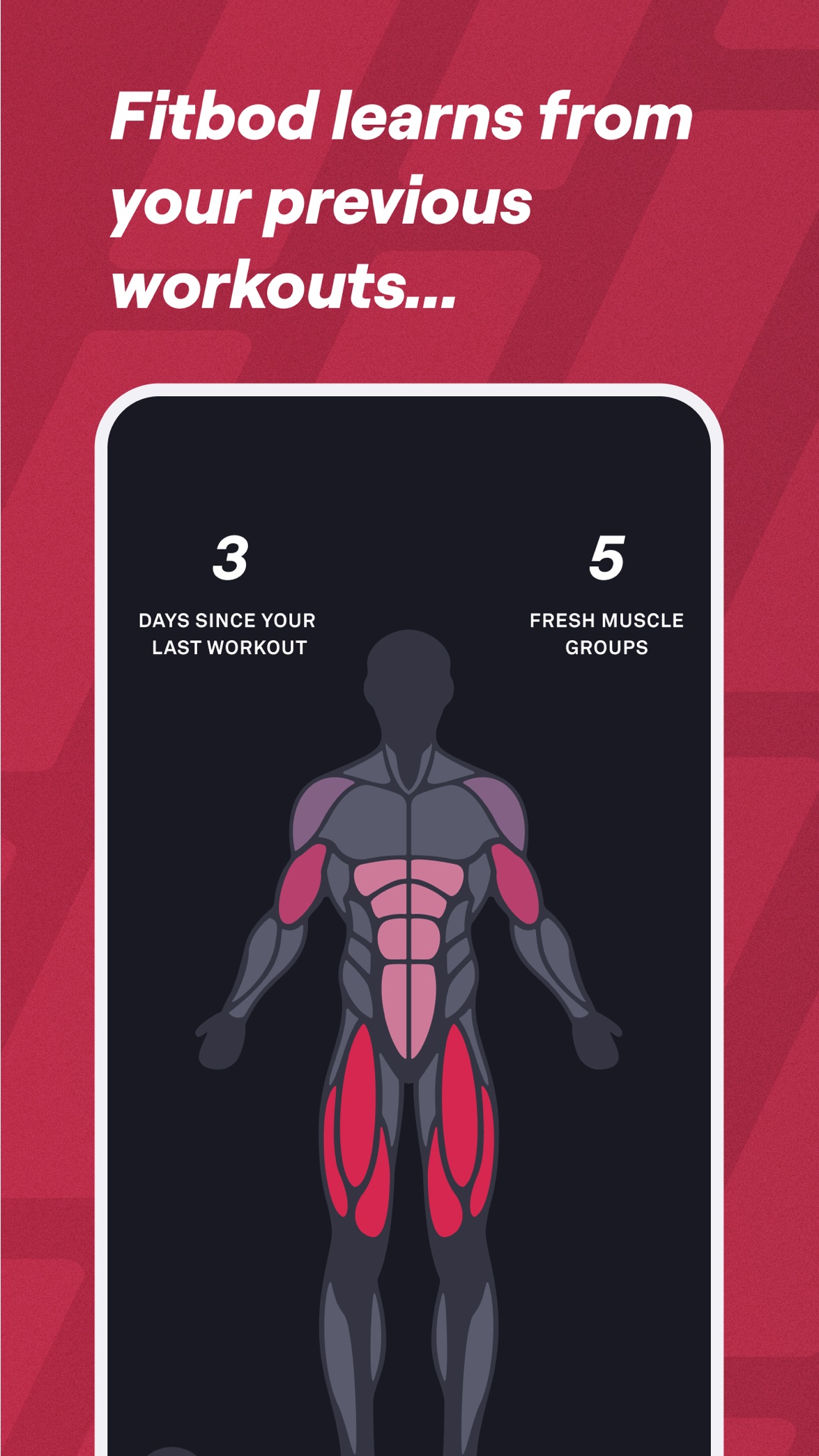
- Polished muscle-recovery visuals
- Widely reviewed and established
Trade-offs
- Generator first, not a conversational coach
- More session-focused than block-focused
How Fitbod fits into a training week
A workout app can look strong in a feature table and still fail once training gets messy. We look at how Fitbod handles four normal moments: planning before you arrive, logging while you are resting between sets, deciding what should change next week, and reviewing whether the app is actually helping you train more consistently.
Before the workout
The setup flow should make the next session obvious. For Fitbod, that means judging whether its core workflow (generated sessions, equipment settings, exercise replacements, and recovery-informed next workouts) matches the user who is choosing it: generated workouts around your available equipment.
During the workout
Rest periods are short, so every extra tap matters. We give more credit to apps that keep set entry, substitutions, exercise history, watch use, and offline behavior calm under normal gym pressure.
After the workout
The useful question is whether the app converts a completed session into a better next session. Some apps mainly preserve history; others generate workouts or coach progression.
Longer-term fit
We also weigh whether the pricing, free tier, and platform support make sense after the novelty wears off. Fitbod is less ideal for conversational coaching, social accountability, or a full strength block, even if the headline feature list looks attractive.
How Fitbod scored in our review
Our methodology gives more weight to the parts of a workout app that matter during strength training: setup, logging speed, progression support, workout-floor reliability, pricing clarity, and whether the app helps you make better decisions after the session.
Fitbod lands at 4.1/5 because the generated-workout and equipment-handling experience is genuinely strong, but the score stops short of the top tier because pricing begins after the trial, offline confidence is limited, and the coaching layer explains less than a full strength coach would.
High because Fitbod's core product is generated sessions around goals, equipment, and recent training history.
High because equipment selection and exercise substitution are central to the setup flow.
Lower because the app generates workouts, but it does not act like a conversational coach for stalled lifts or multi-week block decisions.
Solid because workout history and recovery inform future sessions, but the logic is less transparent than a coach explaining progression choices.
Moderate because the trial/subscription model is useful for the right user but weaker value if you only need a cheap manual logbook.
How we evaluated Fitbod
We score workout apps through the lens of strength training, not general wellness. The main criteria are whether an app can help you plan training, log sets quickly, progress loads or reps over time, and stay reliable on phone or watch while you train.
We also separate official product claims from editorial judgement. Pricing, platforms, and feature availability are checked against official sources where possible, while the score is our view of how useful the app is for lifters choosing between loggers, generators, program libraries, and coaching tools.
Why you should trust this review
This review is written for lifters comparing real training workflows, not for a generic app directory. We surface where Fitbod is genuinely strong, where another app may be a better fit, and which claims should be rechecked at publish time because pricing, platform support, and free-tier limits can change.
Fitbod pricing
Pricing changes often, so treat this as a source-checked snapshot rather than a permanent price quote.
Current US pricing snapshot
Checked July 27, 2026. Fitbod's website checkout and current subscription help list the monthly and yearly prices below. App Store and Google Play checkout screens can still vary by region, promotion, platform, and account history.
Monthly plan
$15.99/mo
Shown on Fitbod's US website checkout and subscription help.
Yearly plan
$95.99/year
Shown as the US website yearly plan, equivalent to $8.00/mo before store-region differences.
Trial
7 days
Current Fitbod trial help says new users pick a monthly or yearly plan and are charged unless they cancel before the trial ends.
After trial
Paid access required for new logged workouts
Fitbod's trial help says past workouts remain viewable, but logging new workouts requires a paid subscription after trial access ends.
Price
US website snapshot: $15.99/month or $95.99/year; store pricing varies by region
Free tier
7-day trial after selecting a monthly or yearly plan, then subscription
Pricing evidence
We use official pricing, checkout, FAQ, App Store, and Google Play sources where available. Exact monthly or annual prices can vary by region, promotion, and app-store account, so the live store or checkout page is the final source before purchase.
Platform and workout-floor evidence
Platform, watch, and offline labels are conservative summaries. The linked sources below are the evidence to check for iOS, Android, Apple Watch, and offline behavior before treating a feature as current.
Fitbod alternatives
If Fitbod is not the right fit, these are the closest options for different priorities.
| Alternative | Best for | Price | Evidence checked | Why choose it over Fitbod |
|---|---|---|---|---|
| Alternative Hevy | Best forself-programmed lifters who want fast logging and friends | Price Free; US website snapshot: Pro $2.99/month, $23.99/year, or $74.99 lifetime | Evidence checked | Why choose it over Fitbod The best free logbook if you already know your plan. It logs beautifully but won't decide anything for you. |
| Alternative Alpha Progression | Best forlifters who want progression rules, training plans, and detailed strength tracking | Price Free; Pro subscription | Evidence checked | Why choose it over Fitbod A strong specialist for progression-minded lifters. Choose it when you want a planning and analytics tool more than a social logbook. |
| Alternative Strong | Best forexperienced lifters who want quiet, reliable logging | Price Free; US App Store snapshot: Pro $4.99/month or $29.99/year | Evidence checked | Why choose it over Fitbod A great minimal logbook, especially on Apple Watch. Choose it when you want the interface to get out of the way, not coach you. |
| Alternative StrengthLog | Best forpeople who want a free, strength-specific tracker | Price Free; Premium subscription | Evidence checked | Why choose it over Fitbod One of the safest free-first picks for strength tracking. Choose it when budget and strength focus matter more than AI coaching. |
Hevy vs Fitbod
Hevy is the better fit when the workout is already decided and the app's job is fast set logging, routines, social history, and a stronger free-first logbook. It does not replace Fitbod's generated-session workflow.
How we checked this: price and platform claims should be refreshed from the linked official product, pricing, App Store, Google Play, or first-party Brace AI pages before purchase.
Alpha Progression vs Fitbod
Alpha Progression is the more progression-focused planner: better when you want rules, plans, and analytics, weaker when you want Fitbod-style session generation around changing equipment.
How we checked this: price and platform claims should be refreshed from the linked official product, pricing, App Store, Google Play, or first-party Brace AI pages before purchase.
Strong vs Fitbod
Strong is the quiet minimalist option for experienced lifters, especially iPhone and Apple Watch users. It is less helpful if you want the app to decide today's workout.
How we checked this: price and platform claims should be refreshed from the linked official product, pricing, App Store, Google Play, or first-party Brace AI pages before purchase.
StrengthLog vs Fitbod
StrengthLog is the budget-friendly strength tracker: useful when free strength logging and a training library matter more than AI-generated workouts.
How we checked this: price and platform claims should be refreshed from the linked official product, pricing, App Store, Google Play, or first-party Brace AI pages before purchase.
Independent reviews and community sources are used for context about user tradeoffs, not as the primary source for pricing, platform, or feature availability.
Sources and update map
Last source check: July 27, 2026. Pricing, platform, watch/offline, and editorial context use separate source groups so volatile buyer claims are not supported only by a general source list.
Pricing and trial
Platform, watch, and offline
Editorial/community context
Frequently asked questions
Is Fitbod worth it?
Is Fitbod free?
Is Fitbod good for beginners?
What is the best Fitbod alternative?
Sources
- 01 Fitbod membership page (US website checkout: monthly and yearly subscription snapshot) app.fitbod.me
- 02 Fitbod subscription help (subscription plans, 7-day trial, and regional pricing caveat) help.fitbod.me/hc/en-us/articles/360004904714-How-to-Subscribe-to-Fitbod
- 03 Fitbod trial help (7-day trial, auto-renewal, and post-trial access limits) help.fitbod.me/hc/en-us/articles/30542136101527-How-the-Trial-Works
- 04 Fitbod FAQs (billing, features, integrations, trial, and platform-pricing caveats) fitbod.me/faqs/
- 05 Fitbod App Store listing (iOS, Apple Watch, ratings, and in-app purchase reference) apps.apple.com/us/app/fitbod-gym-fitness-planner/id1041517543
- 06 Fitbod Google Play listing (Android availability and user-review context) play.google.com/store/apps/details
- 07 Fitbod Apple Watch help (watch support) help.fitbod.me/hc/en-us/articles/360006499194-Apple-Watch
- 08 Fitbod offline help (offline-use limitations) help.fitbod.me/hc/en-us/articles/360006572594-Can-I-use-Fitbod-without-an-internet-connection
- 09 Garage Gym Reviews Fitbod review (independent review context) garagegymreviews.com/equipment/fitbod
- 10 Lifehacker Fitbod review (independent editorial context) lifehacker.com/health/fitbod-app-review
- 11 Fitbod subreddit (community feedback themes) reddit.com/r/fitbod/
Private iOS testing · Apple Watch in development
Want coaching, not just tracking?
Brace AI writes the plan, tracks the workout, and explains what to change next when a basic logbook is not enough.