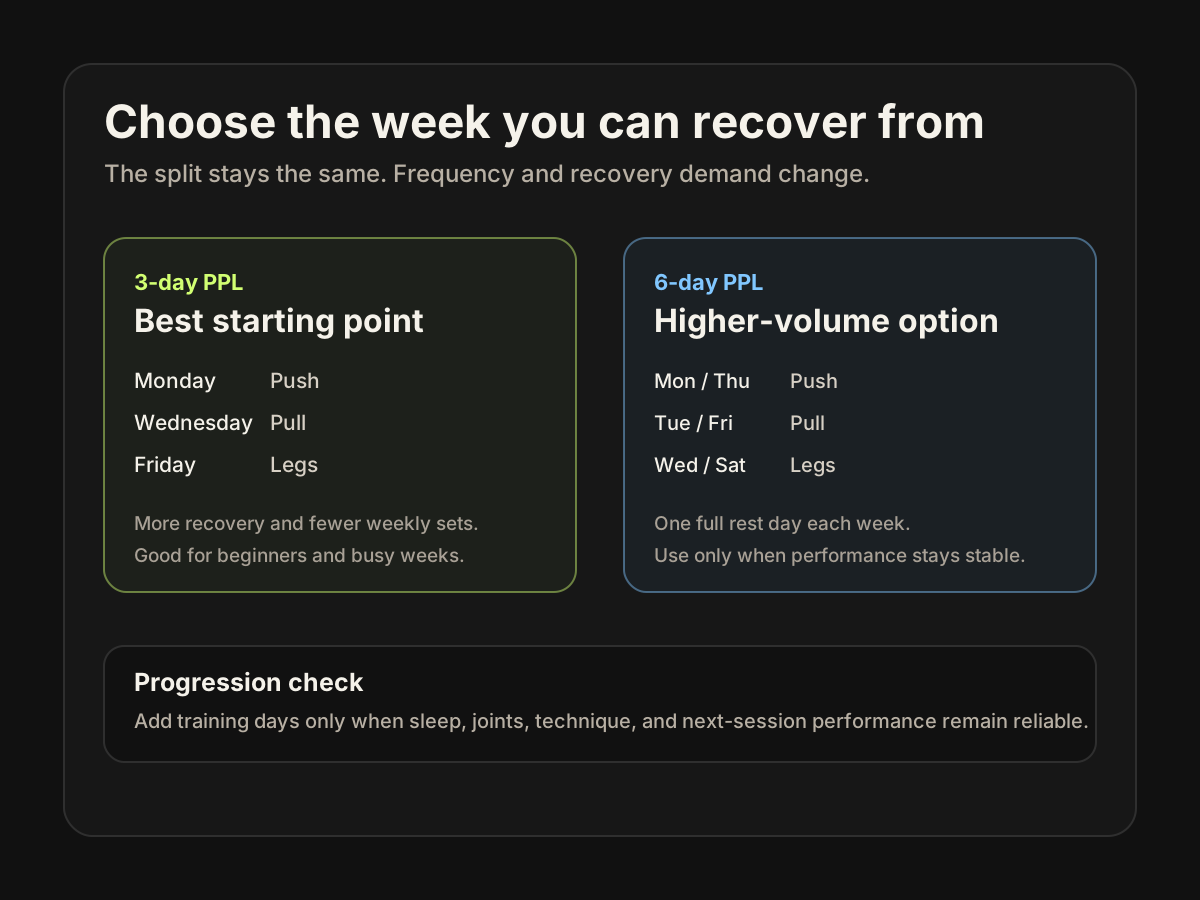
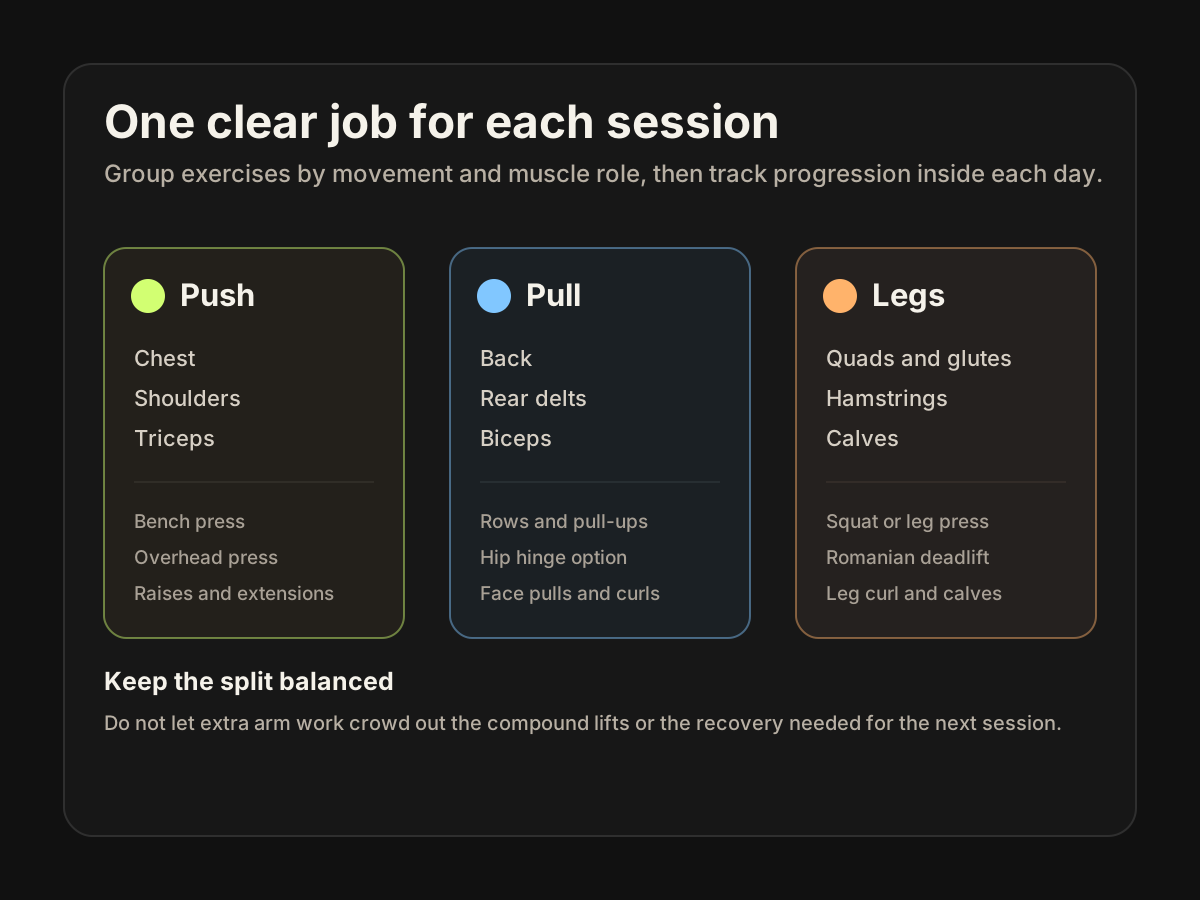
Push pull legs is the go-to split once full-body training starts to feel cramped, but the best version depends on your recovery and experience level. A 6-day PPL is a higher-volume hypertrophy split. A 3-day PPL is a simpler weekly rotation that keeps the same push, pull, legs structure without asking you to train almost every day.
If you want the shortest answer: start with the 3-day version if you are new, busy, or unsure how well you recover. Move to the 6-day version when you can consistently finish the workouts, add reps or load, and still feel ready for the next session.
Level note: the 3-day version is the beginner-safe entry point, while the rolling or 6-day version is better treated as intermediate because recovery, weekly volume, and joint stress become more important.
Best answer
| Goal | Best PPL setup | Why |
|---|
| Beginner or busy lifter | 3-day PPL: Monday push, Wednesday pull, Friday legs | Easier recovery, fewer moving parts, and enough time to learn the main lifts |
| Flexible intermediate | Rolling PPL: push, pull, legs, rest, repeat | Trains each pattern often without forcing six fixed gym days every calendar week |
| Hypertrophy-focused intermediate | 6-day PPL: push, pull, legs, push, pull, legs, rest | More weekly volume when recovery, sleep, joints, and schedule can support it |
Best PPL routine: quick recommendation
- Best default: run push, pull, legs, rest, then repeat if you recover well. This gives you six training days across eight days rather than forcing six straight sessions every week.
- Best beginner version: run push on Monday, pull on Wednesday, and legs on Friday. Keep a few clean reps in reserve on most compound sets and add weight only after the reps are consistent.
- Best hypertrophy version: run six sessions per week, but split hard sets across the two push, pull, and leg days so each workout stays productive instead of turning into a marathon.
These are our defaults for turning the cited frequency, volume, and progression principles into a usable routine — not medical advice or a universal prescription.
Evidence note: the frequency comparison is informed by resistance-training frequency research (Schoenfeld et al.); the volume and progression defaults draw on the hypertrophy-volume review and ACSM progression models. The exact three-day and six-day schedules are our practical coaching templates, not universal standards.
3-day vs 6-day PPL
| Version | Best for | Main upside | Main tradeoff |
|---|
| 3-day PPL | Beginners, busy lifters, recovery-limited lifters | Easier recovery and simpler weekly planning | Lower weekly volume unless sessions get longer |
| 4-5 day rolling PPL | Intermediates who want flexibility | Trains each pattern often without forcing fixed weekdays | The calendar changes week to week |
| 6-day PPL | Hypertrophy-focused intermediates | More weekly volume with shorter, focused sessions | Recovery and joint stress become the limiting factors |
For most people, the 3-day version is not a worse program. It is just a lower-frequency version. You still practice each movement pattern every week, you have more time to recover, and you can build consistency before adding more days. The 6-day version makes more sense when your limiting factor is not soreness or schedule, but fitting enough quality sets into the week.
Beginner-safe 3-day PPL
Use the same exercises below, but run each day once per week:
| Day | Workout | Beginner adjustment |
|---|
| Monday | Push | Do 2 to 3 working sets per exercise, not 4 or 5. |
| Wednesday | Pull | Use Romanian deadlifts or back extensions instead of heavy deadlifts if technique is still developing. |
| Friday | Legs | Keep squats controlled and stop before form breaks down. |
For the first few weeks, do not chase failure. Pick a weight you can lift with clean technique, stop most compound sets with a few clean reps in reserve, and add reps before adding weight. If you wake up sore for the next session or your reps drop sharply, cut one accessory exercise before adding more recovery days.
The beginner adjustment above is our own coaching call, built on the principle that newer lifters should manage volume, intensity, and exercise selection conservatively while technique and recovery are still developing (ACSM progression models, NSCA foundations).
How we built this program
We built this PPL around four practical rules.
First, each muscle group needs enough hard weekly work to grow, but more sets only help if they are recoverable. That is why the 6-day version spreads volume across the week instead of cramming everything into long full-body sessions.
Second, frequency is useful because it distributes quality work. A 6-day or rolling PPL can train each pattern more often, while a 3-day PPL keeps frequency lower and recovery easier. Either way, weekly volume, effort, exercise selection, and recovery still matter more than the split name.
Third, beginners usually need fewer moving parts. A 3-day PPL lets newer lifters learn the pattern, track progress, and recover before trying the higher-volume version.
Fourth, progression has to be visible. If load, reps, soreness, and performance are not tracked, it is hard to know whether the split is working or simply making you tired.
Double progression is our own rule for this page, built on the source-backed principle of progressive overload and recoverable progression. The exact load jumps, RIR targets, and deload decisions should be adjusted to your performance, form, soreness, pain, and recovery (ACSM progression models, NSCA foundations).
Recovery and safety notes
Reduce volume if your joints hurt, technique changes under fatigue, or a lift regresses for two sessions in a row. Muscle soreness is normal, but sharp pain, persistent tendon irritation, or worsening performance is a signal to change the plan.
If you are new to barbell lifts, get form feedback before pushing heavy sets. For deadlifts in particular, many beginners recover better by pulling heavy once per week and using Romanian deadlifts, back extensions, or leg curls for the second pull or leg session.
The pain, fatigue, and recovery guidance above is practical coaching advice. ACSM and NSCA support adjusting training variables to the lifter, but injury-specific decisions need individual coaching or clinical guidance.
Source checklist
This page draws on Schoenfeld et al. 2016 and Stronger by Science for training frequency, the PMC volume review and PubMed volume meta-analysis for hypertrophy volume, ACSM progression models and NSCA foundations for progression, rest, intensity, and safety, and StrengthLog, Outlift, and Garage Gym Reviews for practical PPL structure. Sources were reviewed on July 27, 2026.